
15 July 2026
Commercial Electrical Maintenance Contracts for Bristol Businesses: What's Covered and What It Costs
Most Bristol business owners only think about their electrics when something stops working - a tripped board on a Monday morning, a dead socket in the middle of a shift, a fire alarm that will not reset. By then the disruption has already cost you. A commercial electrical maintenance contract flips that around: instead of waiting for a fault, a qualified electrician checks the installation on a set schedule and deals with small problems before they close you down. Commercial and industrial buildings account for a large share of the UK’s electricity use, and older Bristol stock - the Victorian units around Bedminster and Stokes Croft, the converted warehouses near Temple Meads - tends to hide wear that a routine visit picks up early. This guide covers what a maintenance contract actually includes, what the law expects of you, and what it costs in 2026.
What a Commercial Electrical Maintenance Contract Actually Covers
A maintenance contract is an agreement for an electrician to look after your electrical installation on an ongoing basis, rather than being called out job by job. The exact scope is set out in writing at the start, so both sides know what is included. For most Bristol premises that means scheduled inspection and testing of the fixed wiring, checks on distribution boards and protective devices, thermal or visual checks on connections that carry heavy load, and testing of emergency lighting and fire alarm systems where they are fitted.
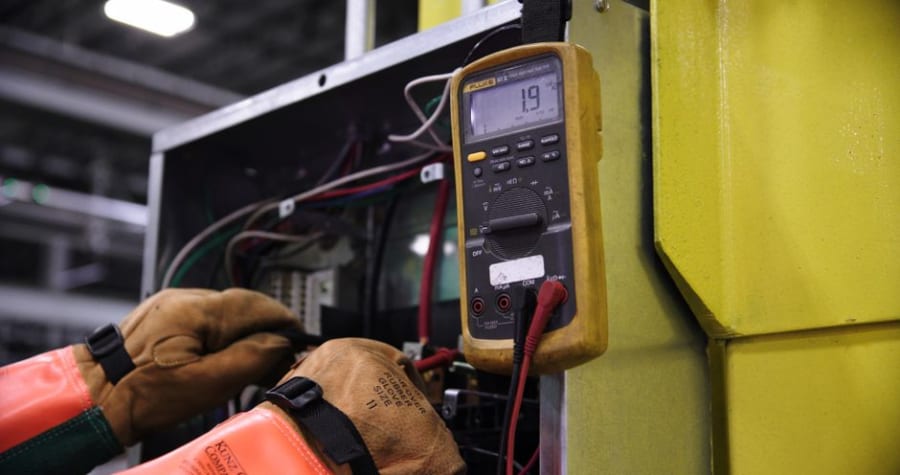
Good contracts also cover the smaller items that get ignored until they fail: worn sockets, loose fittings, overloaded extension arrangements, and outdoor equipment that has taken a beating from the weather. If you run a shop, office or restaurant, a maintenance visit is also the point where portable appliance testing gets done. Our own commercial electrical maintenance and troubleshooting service is built around this - a planned visit that keeps the whole installation compliant, not just a patch on whatever broke last.
Planned vs Reactive: The Two Halves of a Good Contract
There are two sides to maintenance and a sensible contract handles both. Planned preventative maintenance (PPM) is the scheduled work - the visits booked into the calendar months ahead, timed around your trading hours so a city centre retailer is not losing footfall while an electrician works on the board. This is where faults get caught early.

Reactive maintenance is the call-out side: when something does fail, a contract usually guarantees a response time and a rate you have already agreed, rather than the premium a business pays for an unplanned emergency. For a Bristol food business or a warehouse running chillers, that response window matters more than almost anything else. A contract that promises same-day attendance for genuine emergencies is worth far more than a slightly cheaper deal with no guarantee. The balance between the two depends on how much downtime would actually cost you - a quiet office can lean on planned visits, while a busy kitchen needs the reactive cover spelled out.
What the Law Expects From Bristol Employers and Landlords
This is where maintenance stops being optional. Under the Electricity at Work Regulations 1989, any electrical system in a workplace must be maintained so far as is reasonably practicable to prevent danger. That duty sits with the employer or the person in control of the premises - not the electrician. The Health and Safety Executive’s guidance on electrical safety at work makes clear that “maintained” means having a system of periodic inspection and testing in place, and being able to show it.

For landlords letting commercial units, the fixed wiring needs a satisfactory Electrical Installation Condition Report, usually renewed every five years, and insurers increasingly ask to see one before they will pay out. A maintenance contract is the simplest way to keep that paperwork current and prove due diligence if anyone ever asks. If you want the detail on certificates specifically, our post on EICR certificates for Bristol commercial properties breaks down exactly what is required and when.
What Regular Maintenance Picks Up Before It Becomes a Problem
The value of a contract is in what it catches. On a typical Bristol maintenance visit the faults that come up again and again are overloaded circuits in premises that were wired for a different use, connections that have worked loose and started to overheat, moisture getting into outdoor fittings, and consumer units that no longer meet current standards. None of these announce themselves - an overheating connection behind a panel gives no warning until it fails, and faulty wiring remains one of the leading causes of fire in commercial buildings.

Catching a loose connection in a distribution board during a booked visit costs very little. The same fault left alone can take out a circuit during trading hours, damage stock, or start a fire. That is the whole economic argument for maintenance in one line: finding a problem early costs a fraction of what it costs to have the problem find you.
What a Commercial Electrical Maintenance Contract Costs in Bristol
Pricing depends on the size of the installation, how many circuits and boards there are, and how much reactive cover you want built in. As a rough 2026 guide for Bristol premises, a small shop or office with one or two distribution boards might sit in the region of a few hundred pounds a year for scheduled inspection and testing plus priority call-out rates. A larger site - a restaurant, a multi-unit building, or a small warehouse - runs higher because there is more to test and the reactive response promise carries more weight.

Most contracts are priced annually and spread the cost, which is easier to budget than an unpredictable run of emergency call-outs. It is worth asking exactly what the fee includes: whether periodic inspection is part of it or billed separately, what the guaranteed response time is, and whether minor remedial work is covered or quoted each time. A transparent breakdown is a good sign. For a sense of wider pricing across services, our guide to commercial electrical work costs in Bristol sets out the going rates.
How Often Should Different Bristol Premises Be Inspected
Frequency is not one-size-fits-all. Fixed wiring in most commercial premises should have a full periodic inspection at least every five years, but the routine maintenance in between varies a lot by building type. An office might need little more than an annual check and PAT testing. A restaurant kitchen, with heat, steam, grease and heavy equipment, benefits from more frequent visits because the environment is hard on wiring. Industrial units and warehouses with three-phase machinery often want checks more than once a year on the circuits that take the most punishment.

Premises that the public use, or where a failure would be dangerous - anywhere with emergency lighting and fire alarms - carry the highest expectation. Emergency lighting needs brief monthly function tests and an annual full-duration test, which a contract can schedule so nothing slips. The right interval is a judgement based on the environment, the age of the installation, and how the building is used, which is exactly what a good electrician sets when the contract starts.
Choosing the Right Maintenance Partner in Bristol
The contractor matters as much as the contract. Look for electricians who are properly accredited - NICEIC registration and ECS-carded engineers - and who work in commercial settings day to day, not domestic installers taking on the odd shop. Ask how they schedule visits around trading hours, what their genuine emergency response time is across Bristol and the surrounding towns, and whether you get clear documentation after every visit for your insurers and compliance file.

A maintenance relationship works best as a partnership. The same team getting to know your building over years spots changes an unfamiliar electrician would miss, and can plan upgrades before something forces your hand. That continuity is the real payoff - fewer surprises, less downtime, and a paper trail that keeps you on the right side of the law.
Frequently Asked Questions
How often does a commercial property in Bristol need an electrical inspection?
The fixed wiring should have a full periodic inspection (an EICR) at least every five years for most commercial premises, and more often for demanding environments like commercial kitchens or industrial units. Routine maintenance in between varies from an annual check for an office to several visits a year for a busy warehouse. Emergency lighting needs monthly function tests and an annual full-duration test.
Is an electrical maintenance contract a legal requirement for my Bristol business?
A contract itself is not legally required, but maintaining your electrical system is. The Electricity at Work Regulations 1989 place a duty on employers and those in control of premises to keep electrical systems safe, which in practice means having a system of periodic inspection and testing in place. A maintenance contract is the simplest way to meet that duty and prove you have done so.
Can electrical maintenance be carried out outside our opening hours?
Yes. Most contracts schedule planned visits around your trading hours, including early mornings and evenings, so a city centre shop or restaurant is not losing business while work is carried out. This is agreed when the contract is set up so it fits your operation.
What is the difference between planned and reactive maintenance?
Planned preventative maintenance is scheduled work booked in advance to catch faults before they cause problems. Reactive maintenance is the call-out side, dealing with faults after they happen, usually at a guaranteed response time and pre-agreed rate under a contract. A good contract covers both.
Get a free quote from Bristol Commercial Electricians and we will put together a maintenance plan that fits your premises.