
15 July 2026
Commercial Security and Outdoor Lighting in Bristol: Car Parks, Yards and Premises Protection
The dark half of the Bristol year is long, and for a business an unlit yard, car park or rear entrance is an open invitation. Outdoor and security lighting is one of the cheapest, most effective ways to protect commercial premises - it deters opportunist crime, keeps staff and customers safe on dark evenings, meets insurers’ expectations, and makes any CCTV worth having. From the distribution yards of Avonmouth and the retail parks around Cribbs Causeway to city-centre premises and trade units across Bristol, the businesses that take lighting seriously have far fewer problems than those relying on a single tired floodlight over the back door. This guide covers the types of commercial security lighting, how to light car parks and yards properly, how lighting works with CCTV, and how to get the install right without lighting up the whole street.
Why Outdoor and Security Lighting Matters for Bristol Businesses
Security lighting does several jobs at once, which is why it gives such good value. First and most obviously, it deters. Opportunist intruders rely on darkness and cover, and a well-lit approach, yard or car park removes both - most will simply move on to an easier target. Second, it keeps people safe: staff locking up on a dark winter evening, customers crossing a car park, deliveries at the back of a unit all benefit from proper light underfoot.
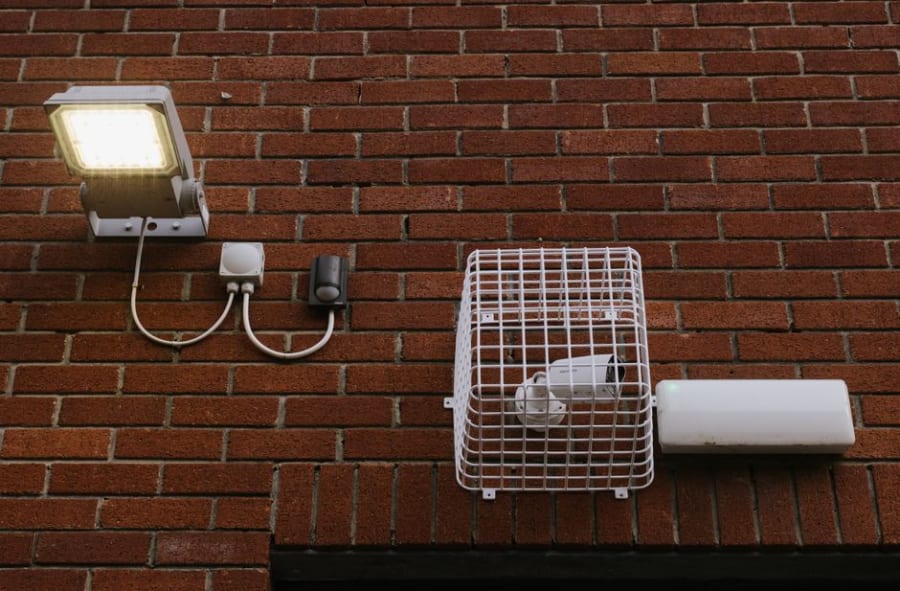
Third, it makes everything else work. CCTV is close to useless in the dark, so good lighting is what turns a grainy silhouette into usable footage. Insurers increasingly expect sensible security measures, and lighting is a basic one. The police-backed Secured by Design initiative treats lighting as a core part of designing out crime, and Avon and Somerset Police publish practical business crime prevention advice along the same lines. For a modest outlay, lighting protects your premises, your people and your stock.
Types of Commercial Security Lighting
There is no single security light - the right answer is usually a mix matched to each area. Floodlights, now almost always LED, throw broad, bright light across yards, car parks and building faces and are the workhorse of commercial security lighting. Motion-activated (PIR) floodlights stay off until something moves, then snap on, which both saves energy and draws attention to activity in rear yards, side alleys and less-used access points.

Dusk-till-dawn lighting comes on automatically at nightfall and stays on, giving constant, predictable illumination for entrances, main car parks and pedestrian routes where you want steady light rather than sudden bursts. Bollard and low-level lighting guide people safely along paths and around a site without glare. Wall-mounted amenity lights cover doorways and entrances. A good design combines these so each part of the site has the right kind of light for how it is used, rather than one type bolted on everywhere.
Lighting Car Parks and Yards
Car parks and yards are where commercial lighting design earns its keep, because large open areas are easy to light badly. The goal is even coverage with no dark patches where someone or something can hide, and no blinding hotspots either. That usually means column-mounted or building-mounted floodlights positioned so their pools of light overlap, giving consistent brightness across the whole area rather than bright circles separated by shadow.
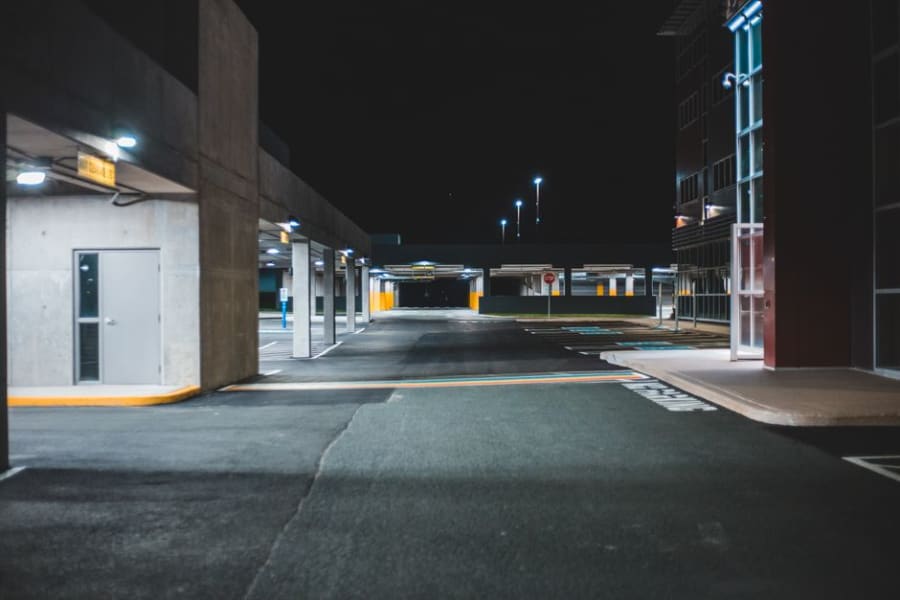
For a working yard at an Avonmouth or St Philip’s unit, that means lighting the loading areas, the perimeter and the access points to a standard that lets staff work safely and CCTV see clearly after dark. For a customer car park, it means safe, welcoming light that also protects vehicles. Getting the column positions, fitting choice and aiming right is a design job, not a case of pointing a few floodlights roughly outward, and it is worth doing properly given how much ground these lights have to cover.
Lighting and CCTV Working Together
Lighting and CCTV are two halves of the same job, and they should be designed together. A camera can only record the light that reaches it, so a dark area is a blind spot however good the camera. Matching the lighting to the camera coverage - making sure the areas you most want on film are the areas that are properly lit - is what turns a security system from reassuring-looking into genuinely useful.

There are technical details that matter here: very harsh, uneven lighting can actually hurt camera images with glare and deep shadow, so consistent, well-distributed light usually gives better footage than a single fierce floodlight. It is worth planning lighting alongside commercial CCTV installation and any access control and entry systems so the whole security setup works as one. Designed together, lighting, cameras and access control cover far more than the sum of their parts.
LED, Controls and Running Costs
The reason security lighting no longer has to mean big electricity bills is LED. Modern LED floodlights produce far more usable light per watt than the old halogen and discharge fittings they replace, last many times longer, and cope well with being switched by sensors. For a business lighting a yard or car park every night through a Bristol winter, that efficiency is a real, ongoing saving.

Controls make it better still. Motion sensors mean lights that are not needed constantly only run when there is activity, timers and photocells make sure nothing is left burning through daylight, and zoning lets you light the parts of a site in use without illuminating all of it. The upshot is that good security lighting today gives you more protection for less running cost than the inefficient setups many premises still have. Replacing old floodlights with well-controlled LED often pays back through the energy saving alone.
Getting It Right: Light Spill, Neighbours and Compliance
Security lighting done badly causes as many problems as it solves. Over-bright, poorly aimed floodlights that spill across a boundary onto a neighbour’s property or dazzle passing drivers cause complaints, sour relations, and can fall foul of light-nuisance rules. The answer is not less security - it is better design: fittings chosen, positioned, aimed and shielded so the light lands where it is needed and nowhere it is not.

Everything outdoors also has to be installed to a proper standard for the environment. Outdoor fittings and cabling must be weatherproof and correctly rated, connections have to be suitable for exposure to Bristol weather, and every circuit needs proper protection. The Electrical Safety First guidance is a good reminder that outdoor electrics are less forgiving than indoor ones. A properly designed and installed scheme gives you the security benefit, keeps the neighbours onside, and stands up to years of weather.
Planning Commercial Security Lighting in Bristol
The best way to get security lighting right is to start with a survey of the site after dark. An electrician looks at the layout, the vulnerable points, where power can be run from, and how the lighting should tie in with any cameras or access control, then designs a scheme that covers the site properly without over-lighting it. That is far more effective than buying floodlights off the shelf and hoping.

Whether you are protecting a distribution yard on the edge of the city, a customer car park, or a row of trade units, the combination of the right fittings, sensible controls and a proper install is what makes outdoor lighting genuinely protect your premises. If your business has dark spots that worry you going into winter, it is worth getting them looked at before an incident rather than after. We are happy to survey a Bristol site and design security lighting that actually does its job.
Frequently Asked Questions
Does security lighting actually deter crime?
Good outdoor lighting is one of the most cost-effective deterrents a business has. A well-lit yard, car park or entrance removes the cover that opportunist intruders rely on, makes people feel safer, and dramatically improves any CCTV footage. It works best as part of a wider approach alongside CCTV and access control rather than on its own, but as a first line of deterrence it earns its keep.
Should security lights be on all night or motion-activated?
It depends on the area. Entrances, car parks and pedestrian routes are often best on dusk-till-dawn lighting for safety and consistent CCTV images, while yards, side alleys and rear access points suit motion-activated (PIR) floodlights that draw attention when something moves. Many Bristol businesses use a mix, and modern LED with sensors keeps the running cost of either low.
How do I stop security lighting annoying neighbours?
By designing it properly. Over-bright, badly aimed floodlights that spill onto neighbouring properties or the road cause complaints and can breach light-nuisance rules. Correctly specified fittings, aimed and shielded so the light lands where it is needed and not where it is not, give you the security benefit without the light pollution. This is part of what a proper lighting design gets right.
Can security lighting be added to my existing Bristol premises?
Yes. Outdoor and security lighting can be retrofitted to almost any commercial premises - the job is running suitably protected cabling to weatherproof, correctly rated fittings and, where wanted, tying them into sensors, timers or your CCTV. A survey establishes the best positions and how to route power to them safely, then it is a straightforward installation for a commercial electrician.
Get a free quote from Bristol Commercial Electricians for commercial security and outdoor lighting anywhere in Bristol.