
15 July 2026
Who Pays for Electrical Work in a Commercial Lease? A Bristol Guide for Tenants and Landlords
Signing a commercial lease in Bristol usually means taking on more electrical responsibility than tenants expect. The lease you sign - not common sense - decides who pays when the fuse board is condemned, who keeps the EICR current, and who foots the bill for tired wiring when you hand the keys back. Most commercial leases in Bristol are full repairing and insuring, which shifts a surprising amount onto the tenant, and the difference between reading the repair clause carefully and skimming it can run to thousands of pounds. This guide sets out who is usually responsible for electrical work in a commercial lease, where the traps are, and exactly what to check before you sign, whether you are a tenant taking a unit on Gloucester Road or a landlord letting an office in the city centre.
Why Electrical Responsibility Is a Grey Area in Commercial Leases
Commercial leases are not like residential tenancies, where the law hands the landlord most of the repair duty. In a commercial let the parties are free to agree who does what, and the lease is the whole story. That freedom is why electrical responsibility is so often misunderstood: two businesses in near-identical units on the same Bristol estate can have completely different obligations because their leases were drafted differently.

The government’s overview of renting business property and tenant responsibilities is a useful starting point, but the detail lives in your specific lease. The key phrases to find are the definition of the “demised premises” (exactly what you are renting), the repair covenant (what standard you must keep it to), and the alterations clause. Get those three straight and most of the electrical picture falls into place. Skip them and you can inherit a liability you never priced in.
Full Repairing and Insuring (FRI) Leases: What They Mean for You
The most common commercial lease in Bristol is the FRI lease, and tenants need to understand what those letters mean. Full repairing puts the cost of repairing and maintaining the premises on the tenant. Insuring means the tenant reimburses the landlord’s buildings insurance. In practice, on an FRI lease of a whole unit, the electrical installation inside that unit - the wiring, the distribution board, the fixed accessories - is usually the tenant’s to repair and maintain, even though the tenant does not own it.
That catches people out. A business takes a unit, the ageing consumer unit fails a year in, and the tenant discovers the repair bill is theirs, not the landlord’s. On a multi-let building the landlord usually keeps responsibility for the structure, the roof and the common parts, and recovers the cost of maintaining shared electrical infrastructure through a service charge. The lease and the service charge provisions together decide the split, so both need reading. The professional body RICS publishes a code for leasing business premises that pushes for clearer, fairer terms, but you still have to check what you are actually signing.
The Schedule of Condition: Your Best Protection
If you take only one thing from this guide, make it this. A schedule of condition is a dated photographic and written record of the state of the premises when you take the lease, attached to it. It caps a full repairing obligation so you have to return the unit in no better condition than you found it - not restore it to as-new.

For Bristol’s older commercial stock this is enormous. If you take an FRI lease of a unit with a twenty-year-old fuse board and dated wiring, without a schedule of condition you could be liable to hand it back with a modern, compliant installation at your own cost. With a schedule of condition recording the electrics as they were on day one, you are protected from paying to improve something that was already tired when you arrived. Commissioning a schedule of condition, including a proper look at the electrical installation, is a small cost that routinely saves tenants a fortune at lease end.
Who Is Responsible for the EICR and Electrical Safety
Somebody has to keep the fixed wiring safe and certified, and the lease decides who. On a full repairing lease of a whole unit, the tenant is usually responsible for the installation inside the demised premises, which means keeping the Electrical Installation Condition Report current - typically renewed every five years. The landlord generally covers the EICR for common areas, shared risers and the incoming supply. On shorter leases, or internal-repairing leases, more can fall to the landlord.
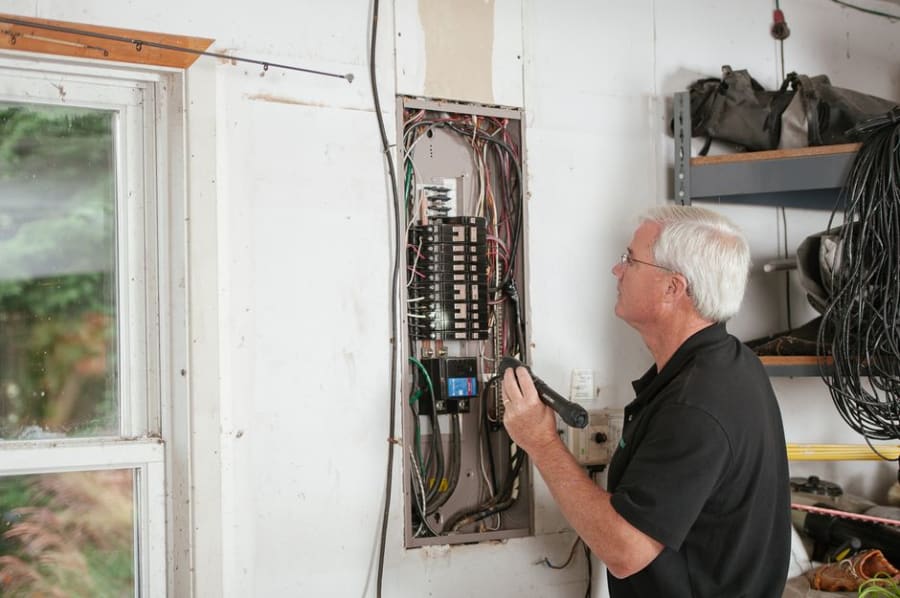
Underneath all of this sits a safety duty that does not disappear whatever the lease says: the person in control of the premises has obligations under electrical safety law to keep the installation safe. Our guide to EICR certificates for Bristol commercial properties explains what the report covers and how often it is needed, and the related question of whether you need one before you even move in is covered in our post on electrical certificates before renting a commercial unit. Sort out who holds this responsibility before completion, not after a fault.
Fit-Out Works and Tenant Alterations
Most tenants want to change the electrics to suit their business - new lighting, extra circuits, power where they need it, a distribution board that can cope. Nearly every lease requires the landlord’s consent for alterations, and electrical fit-out counts. Consent is commonly stated as not to be unreasonably withheld, but you still need it in writing before starting, and the landlord may attach conditions.

The important thing for a tenant is to have fit-out work done by a competent electrician and properly certified, because that certification protects you twice: it proves the work is safe and compliant now, and it heads off arguments at the end of the lease about whether alterations were done to standard. Any commercial wiring or fit-out should come with the correct certificates filed alongside your lease paperwork. Undocumented alterations are a classic dilapidations flashpoint, which brings us to the bill at the end.
Dilapidations: The Bill at the End of the Lease
Dilapidations are the works, or the money in lieu, a landlord can require at lease end to put the premises back into the state the lease demands. Electrical items feature heavily: a landlord may claim for an installation that is no longer compliant, for alterations that were never reinstated, or for a missing or unsatisfactory EICR. For a tenant who did not plan for it, a dilapidations claim can be an unwelcome five-figure surprise.
This is exactly where a schedule of condition earns its money, because it defines the baseline you have to meet. It is also where good record-keeping pays off - consents, certificates and EICRs kept in order through the lease make the end-of-term negotiation far smoother. The Landlord and Tenant Act 1954, which governs business tenancies and the right to renew, sits behind a lot of this, but the practical protection is boringly simple: know your obligations, keep your paperwork, and get the electrics assessed before you commit rather than after.
What to Check Before You Sign a Bristol Commercial Lease
Before you sign anything, get the lease read properly and get the electrics assessed. On the lease side, pin down the demised premises, the repair covenant, the service charge, and the alterations clause, and ask your solicitor specifically who carries the electrical repair and EICR responsibility. If it is an FRI lease of an older unit, push hard for a schedule of condition.

On the electrical side, have the installation surveyed before completion so you know its true state and what it will cost you to maintain or upgrade. An old board, undersized supply or an unsatisfactory EICR is far better discovered before you sign, when it is a negotiating point, than after, when it is your problem. Whether you are the tenant weighing up a unit or the landlord preparing one to let, a survey against the lease terms is the single most useful thing you can do. We are happy to look at a Bristol unit and tell you plainly what the electrics need.
Frequently Asked Questions
Does the tenant or landlord pay for electrical repairs in a commercial lease?
It depends on the lease. Most commercial leases in Bristol are full repairing and insuring (FRI), which puts the repair and maintenance of the demised premises - usually including the electrical installation inside the unit - onto the tenant. The landlord typically retains responsibility for the structure and any shared or common parts. Always read the repair clause and the definition of the demised premises before assuming.
Who is responsible for the EICR on a leased commercial property?
On a full repairing lease the tenant is usually responsible for the fixed wiring inside their unit and therefore for keeping the EICR current, while the landlord covers common areas and shared supplies. On shorter or internal-repairing leases it can sit with the landlord. The lease wording decides it, so check before you take the unit.
What is a schedule of condition and why does it matter?
A schedule of condition is a photographic and written record of the state of the premises at the start of the lease. It limits a full repairing obligation so you only have to return the unit in the condition it was in when you took it, not better. For an older Bristol unit with dated electrics, a schedule of condition can save a tenant a large dilapidations bill at the end.
Do I need permission to do electrical fit-out work in a leased unit?
Almost always, yes. Most leases require landlord consent for alterations, and electrical fit-out - new circuits, lighting, distribution changes - counts. Consent is usually not to be unreasonably withheld, but you need it in writing, and the work must be done by a competent electrician and properly certified so it does not become a problem at the end of the lease.
Get a free quote from Bristol Commercial Electricians for a pre-lease electrical survey, EICR or fit-out work on your Bristol commercial unit.